
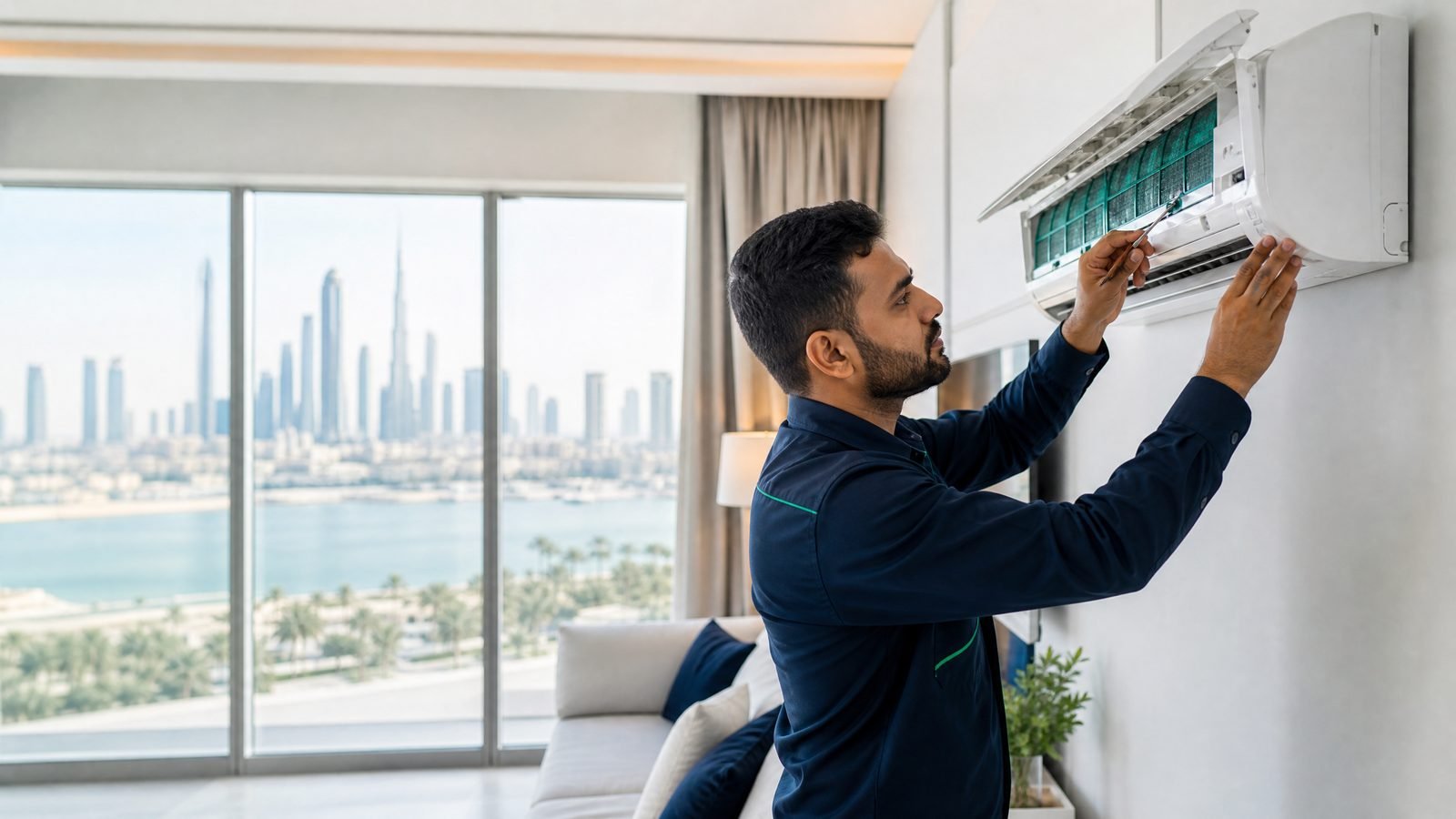
When an AC starts underperforming in Dubai, it is tempting to wait and see whether it improves after the next cycle. That is rarely the best approach. A unit that is blowing warm air, leaking water, cycling repeatedly or making a new mechanical noise is often signalling an airflow, drainage, electrical, control or refrigerant-related problem. This guide explains the safe checks a property owner can make, the warning signs that merit professional AC repair in Dubai, and what a well-run diagnostic visit should cover.
Hummingbird Technical provides AC repair, maintenance and cleaning services for residential and commercial properties across Dubai and the wider UAE. The aim of a repair visit should be clear: identify the cause, explain the work needed, and help prevent the same fault from returning.
Why early AC repair matters in Dubai
Air-conditioning is not a seasonal luxury in Dubai; it is part of the day-to-day comfort and operation of homes, offices, shops and hospitality spaces. A system that has to run longer to deliver the same comfort can increase its own wear and may increase energy use. Dubai Electricity and Water Authority recommends a thermostat setting of 24°C or higher, noting that each one-degree increase in the set point can save up to 5% on AC consumption.[1]
That advice does not mean every cooling problem can be solved by changing the set point. If the room remains uncomfortable at a normal setting, the issue deserves diagnosis. A clean filter, unrestricted airflow and working controls are important, but an experienced technician is needed for tasks involving electrical connections, refrigerant, coils, motors and condensate drainage.
8 signs you should arrange AC repair in Dubai
| What you notice | What you can check safely | What a technician may need to assess |
|---|---|---|
| The AC is running but the room is not cooling. | Confirm the remote is on Cooling mode, set a sensible target temperature, and check whether the filter looks heavily soiled. | Airflow, coils, thermostat operation, refrigerant charge, compressor performance and system controls. |
| Water is dripping from the indoor unit or ceiling. | Move belongings away from the leak. If water is near electrical fittings or the unit is visibly overflowing, switch the unit off. | Condensate tray, drain line blockage, drain pump operation, insulation and the source of excess condensation. |
| Airflow is weak from one or more vents. | Make sure supply vents are open and not blocked by furniture; inspect the filter only if it is safely accessible. | Blower operation, duct condition, coil cleanliness, dampers and restrictions in the air path. |
| The unit starts and stops repeatedly. | Check that the thermostat is not in direct sun or directly under a supply vent, and confirm batteries are working if applicable. | Thermostat, sensors, electrical components, airflow and system sizing or control issues. |
| There is a new rattling, buzzing, grinding or squealing sound. | Do not remove covers or reach into the unit. Note when the sound occurs and whether cooling changes. | Fan motor, blower wheel, mounting, compressor, electrical components or loose panels. |
| You notice a persistent musty or unusual odour. | Check whether the filter is visibly dirty and whether there is standing water or a leak around the indoor unit. | Drainage, moisture sources, coil condition, filter condition and any cleaning or repair required. |
| The breaker trips or the AC will not start. | Do not repeatedly reset a tripping breaker. Record what happened before the fault, such as a storm, power interruption or unusual noise. | Electrical supply, wiring, capacitors, compressor and safe operation of the system. |
| Your electricity use rises without an obvious change in habits. | Review the thermostat schedule, filter condition, window coverings and whether doors are being left open. | System runtime, coil condition, refrigerant, airflow, controls and the underlying reason for reduced efficiency. |
Four sensible checks before you call a technician
These checks can save time without asking you to take risks or attempt a repair yourself.
- Confirm the basics. Set the controller to Cooling mode, choose a reasonable set point, and check that the unit has power. In Dubai, DEWA’s 24°C guidance is a practical benchmark for everyday comfort and conservation.[1]
- Look at the filter. If your manufacturer’s instructions allow it, inspect and clean or replace the accessible filter. ENERGY STAR recommends that central-AC owners inspect, clean or change filters monthly; a dirty filter can raise running costs and contribute to early equipment failure.[2]
- Make sure air can circulate. Open supply vents, move furniture away from grilles, and close curtains or blinds on sunny glazing. These steps do not cure a mechanical fault, but they prevent avoidable airflow restrictions.
- Check for water and document symptoms. Take a clear photo of a leak or error display, note when the issue started, and record the unit type. If water is approaching electrical fittings, turn the unit off and arrange help rather than continuing to run it.
A safe boundary: Do not open electrical panels, adjust refrigerant, bypass safety controls or use harsh chemicals inside an AC system. These are technician tasks, not DIY maintenance.
What a professional AC diagnostic should include
A credible repair visit should move beyond “top up the gas” or a quick surface clean. The technician should listen to the symptoms, inspect the system and explain the cause before recommending work. Depending on the fault, a proper assessment may include the thermostat and controls, electrical connections, motors and blower components, condensate drainage, coils and refrigerant level.
This approach mirrors the areas identified in ENERGY STAR’s maintenance checklist. It specifically calls out inspection of the condensate drain, electrical connections, coils, refrigerant level and blower components; it also notes that dirty coils can reduce cooling ability and make equipment run longer.[2]
AC repair, AC maintenance or AC cleaning: which one do you need?
| Service type | Best suited to | Typical outcome |
|---|---|---|
| AC repair | A specific fault: no cooling, leakage, electrical issue, unusual noise, failed control or poor airflow. | The fault is diagnosed and the required component, control or system issue is addressed. |
| AC maintenance | A working system that needs routine inspection before a high-demand period or after an extended period of use. | Wear, drainage, airflow and control issues can be identified before they become more disruptive. |
| AC cleaning | Visible dust, restricted airflow, dirty filters or a system that requires cleaning as part of its maintenance plan. | Appropriate components are cleaned and the system is inspected for related issues such as drainage or coil condition. |
These services often overlap. For example, a leakage call may require drain cleaning and a fault investigation; weak cooling may lead to a filter and coil inspection before any repair is prescribed. Hummingbird Technical’s AC services page outlines repair, maintenance and cleaning support for split, central and other AC systems across the UAE.
How to reduce repeat AC problems
The most useful maintenance plan is not necessarily the longest checklist. It is a consistent routine built around the actual system, occupancy and property use. Start with manufacturer-approved filter care, keep air paths clear, address drainage issues promptly, and arrange a professional inspection before peak cooling demand when possible. ENERGY STAR recommends annual pre-season contractor check-ups and identifies small items such as drainage and airflow as important parts of preserving performance.[2]
When choosing a replacement filter, avoid assuming that the highest rating is automatically right for every system. The US Environmental Protection Agency recommends selecting the highest-rated filter the system fan and filter slot can accommodate, and consulting an HVAC technician where compatibility is uncertain.[3] A filter that does not fit correctly or creates an excessive airflow restriction can create a different problem.
Frequently asked questions about AC repair in Dubai
Can I keep using an AC that is leaking water?
If the leak is minor and contained, arrange an inspection soon rather than ignoring it. If water is approaching electrical connections, coming through a ceiling or dripping heavily from the indoor unit, switch the system off and seek professional assistance. Continuing to operate it can increase the risk of property damage and make the root cause harder to identify.
Why is my AC on but not cooling properly?
Several causes can produce the same symptom, including a dirty filter, restricted airflow, thermostat issue, coil contamination, refrigerant issue or a mechanical or electrical fault. A diagnosis is more reliable than guessing from one symptom alone.
Will a better filter solve all indoor-air concerns?
No. The EPA explains that filtration can supplement source control and ventilation, but it cannot remove all indoor pollutants or solve a moisture problem at its source.[3] If there is a musty smell, visible water or recurring condensation, ask for the moisture and drainage cause to be investigated as well.
When should I book maintenance rather than wait for a breakdown?
Book maintenance when the system is still working but you notice longer cooling times, gradually weaker airflow, rising use, recurring odours or an approaching period of heavy use. Planned checks make it easier to identify wear and drainage concerns before they become a no-cooling call.
Book professional AC repair in Dubai
If your AC is not cooling, leaking, making unfamiliar noises or repeatedly switching itself off, a clear diagnosis is the quickest route to a sensible repair decision. Contact Hummingbird Technical for AC repair, maintenance or cleaning for homes, offices and commercial properties in Dubai and across the UAE. You can call +971 50 251 5065 or email info@hummingbirdtechnical.com to request assistance.